
“I’m 47. I’ve been a nurse-midwife for 22 years. And for 13 of them, my own stomach never came back either. Then I found out why. And why everything I was doing made it worse.”
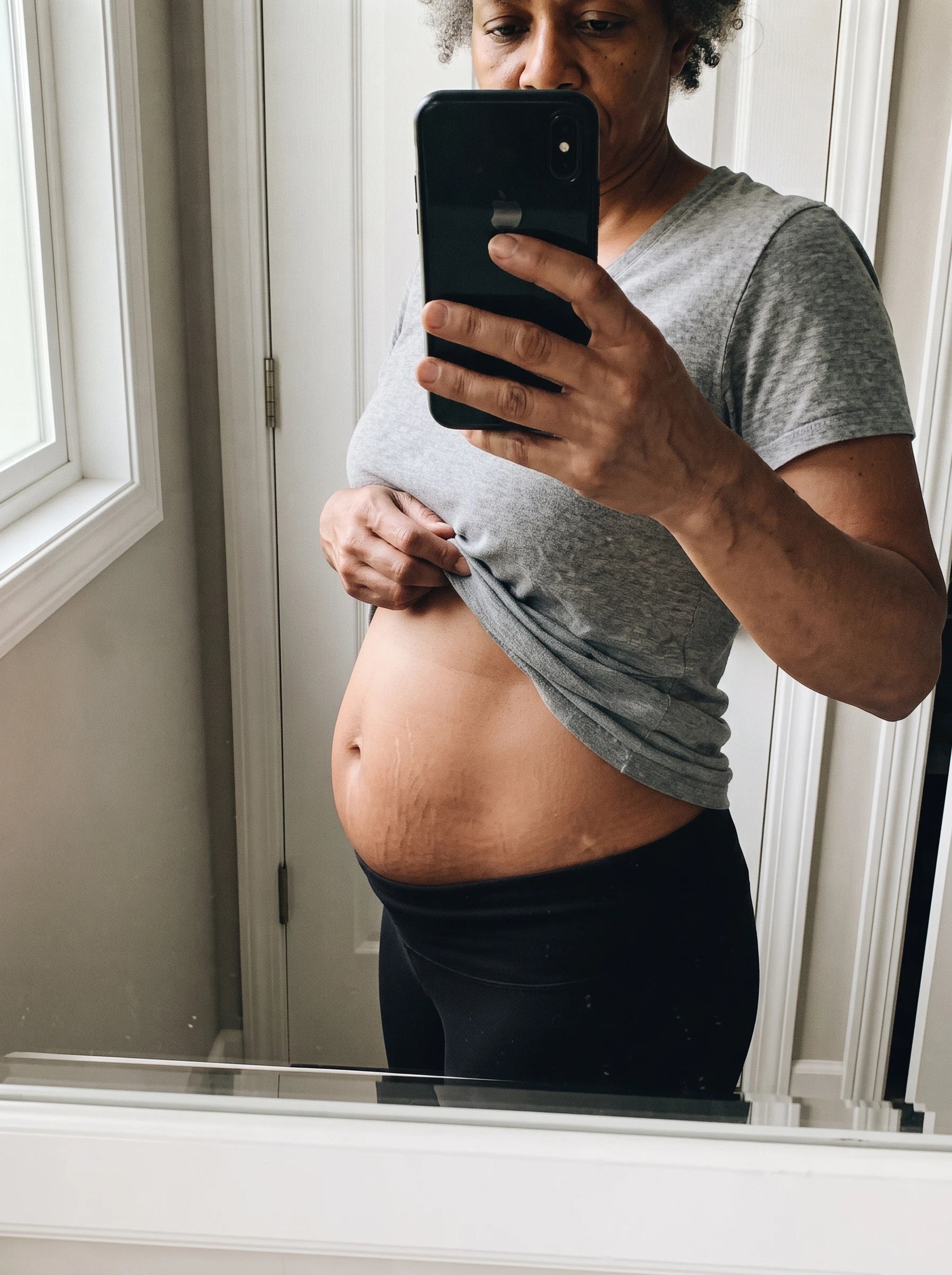
“Renée, I’m 51. My youngest is 17. And my stomach looks exactly the way it did the day I walked out of labor and delivery. Am I supposed to just accept it?”
One of my clients said that to me last week. I put down my coffee. And I told her the thing nobody told me for 13 years:
“No. You don’t have to accept it. But you do have to stop doing what you’re doing, because it’s making it worse.”
The shapewear that squeezes and rolls down after two hours. The ab work you’ve been doing for years. The diets. None of it works, and for most women it makes the real problem worse while nobody says a word.
I’m 47. I’ve been a nurse-midwife for 22 years. And for 13 of those years I carried a small round belly that would not go away, convinced it was age, motherhood, just how it is. Until a colleague put two fingers on my stomach and changed everything.
Shapewear compresses the front. Your body goes all the way around.
This is the part nobody explained to you. And it explains everything.
Regular shapewear, the kind you picked up at the drugstore, the big-name one, the one somebody recommended, compresses the front of your belly only. But your body also has sides. It has a back. It goes all the way around.
So the shaper pushes the tissue out to the sides. The second you take it off, it all comes back. And in the meantime it created those side rolls that were never there before.
In Facebook groups for women over 40, the stories all sound the same. I could have written them myself a few years ago.
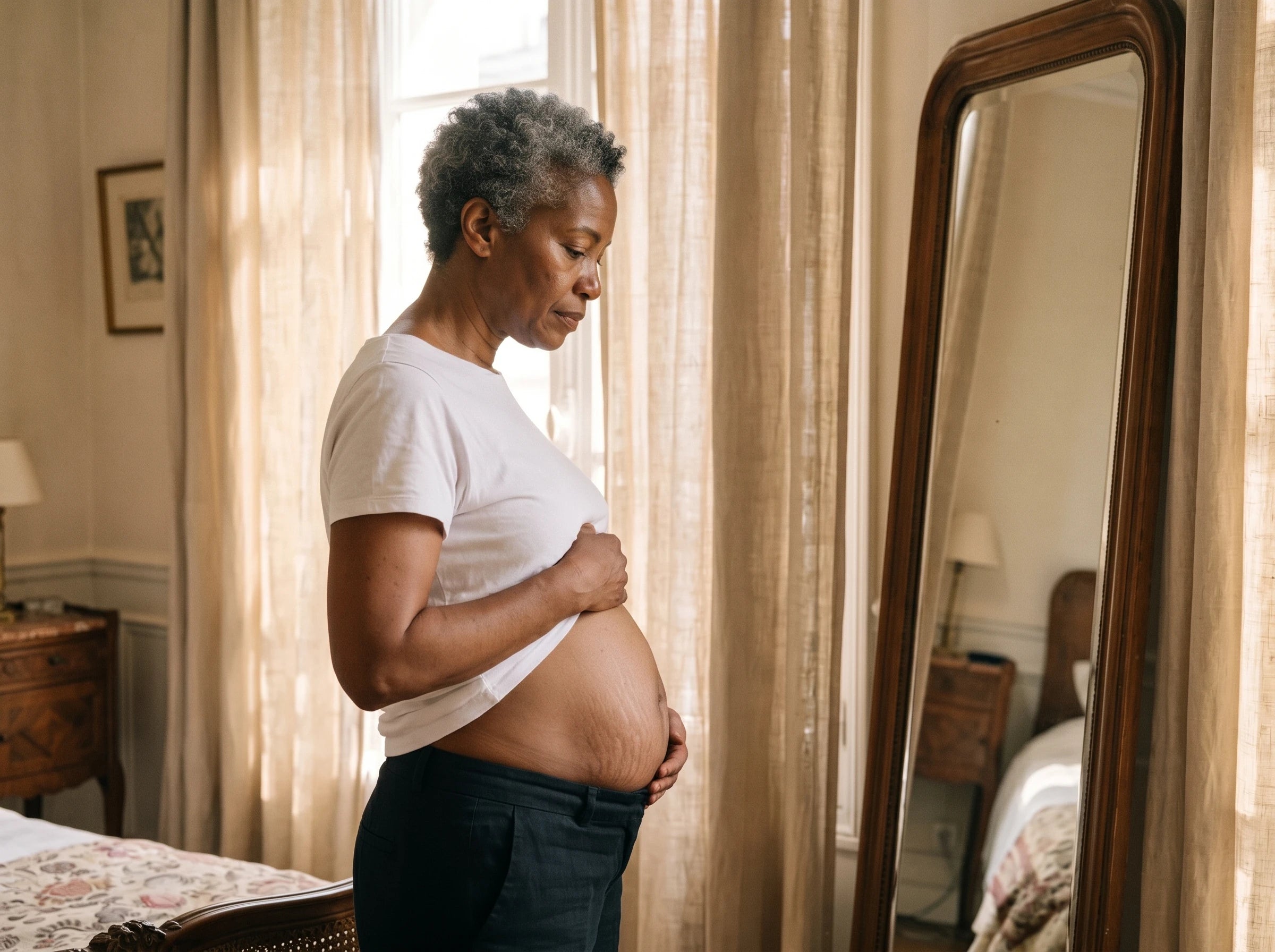
Women who eat well. Who move. Who did, sometimes for twenty years, everything they were told to do. And who still feel guilty for seeing no results.
What nobody told you, and what changes everything
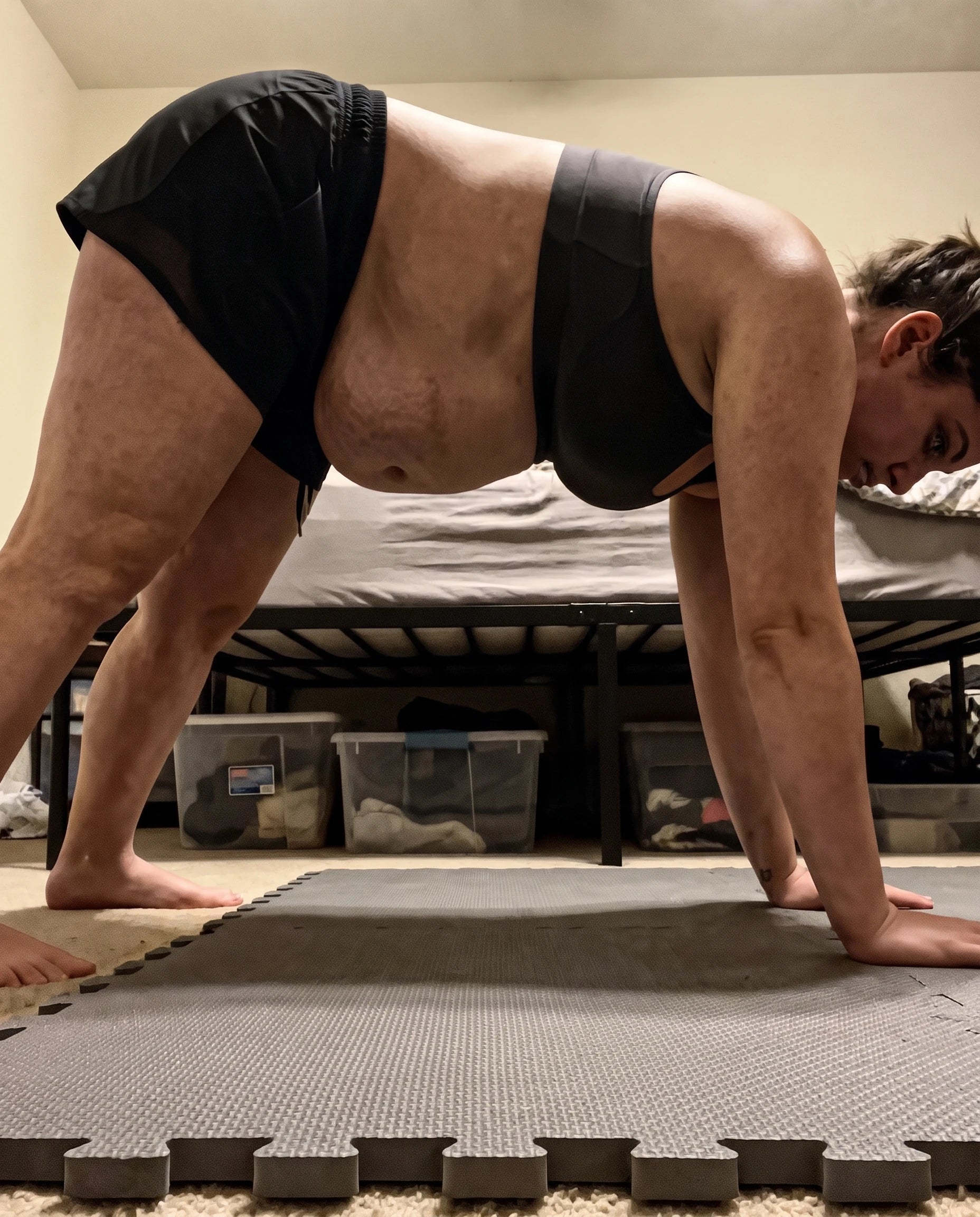
Months of ab work. The belly stays.
Walking, swimming, yoga. The belly stays.
Rigid shapewear. It compresses the front, lets everything escape to the sides, rolls down within the hour. The moment you take it off, everything comes back exactly as it was, because it never fixed anything. It moved the problem.
And here is the cruelest part:
Crunches, sit-ups, standard planks: those are exactly the exercises that can make it worse. Millions of women do them without knowing. Believing they’re helping their body. Quietly making it worse.
The signs I recognize, because I lived them too
The belly that pushes out first thing in the morning, before you have eaten anything. That is not bloating. That is structure.
That strange shape, a point or a ridge, that shows up when you get off the couch. Like something is trying to come out through the middle. That is exactly what is happening.
Clothes that no longer hang the way they used to, not because of weight. Because of shape. The waist is gone. The wrap dress you loved folds strangely in places you can’t explain.
And the detail you may struggle to explain to anyone: in the morning on an empty stomach it is almost bearable. By evening you look five months pregnant. Not because of what you ate. Because of something else. Something internal that no diet reaches.
Then came the appointment that changed everything with one sentence
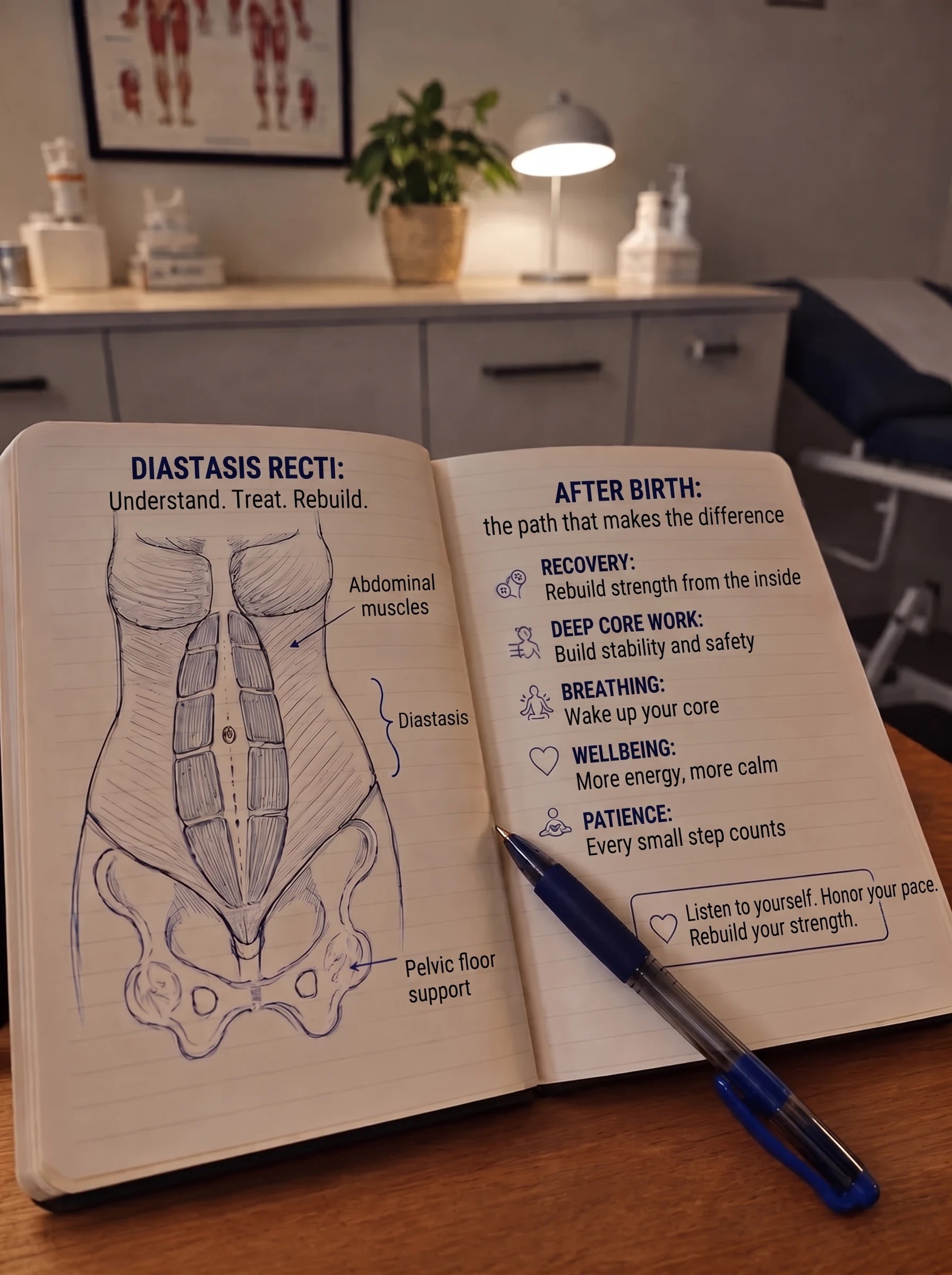
I was there for a routine check. Nothing to do with my stomach, or so I thought.
After examining me, my colleague Alicia, a pelvic floor physical therapist, gently laid two fingers on my belly, just above the navel, right down the midline. Her fingers sank in between two rows of muscle.
She looked at me and said, calmly: “Renée, you have diastasis recti. Your abdominal muscles have separated. You know what it is, you talk about it with your own patients. That is why your stomach doesn’t respond to exercise.”
I shrugged: “Sure, I know what it is. But I’m 47, my youngest is 14. It closed up on its own by now, right?”
She shook her head slowly. “No. For most women who have had more than one pregnancy, that gap stays for 20, 30 years. And standard core work, ab exercises and crunches can widen it.”
Then she said the sentence that changed everything:
My heart stopped. I felt tears coming without understanding why. Not sadness. Relief.
Nobody had ever explained it to me.
I would have skipped 13 years of hiding if somebody had told me sooner
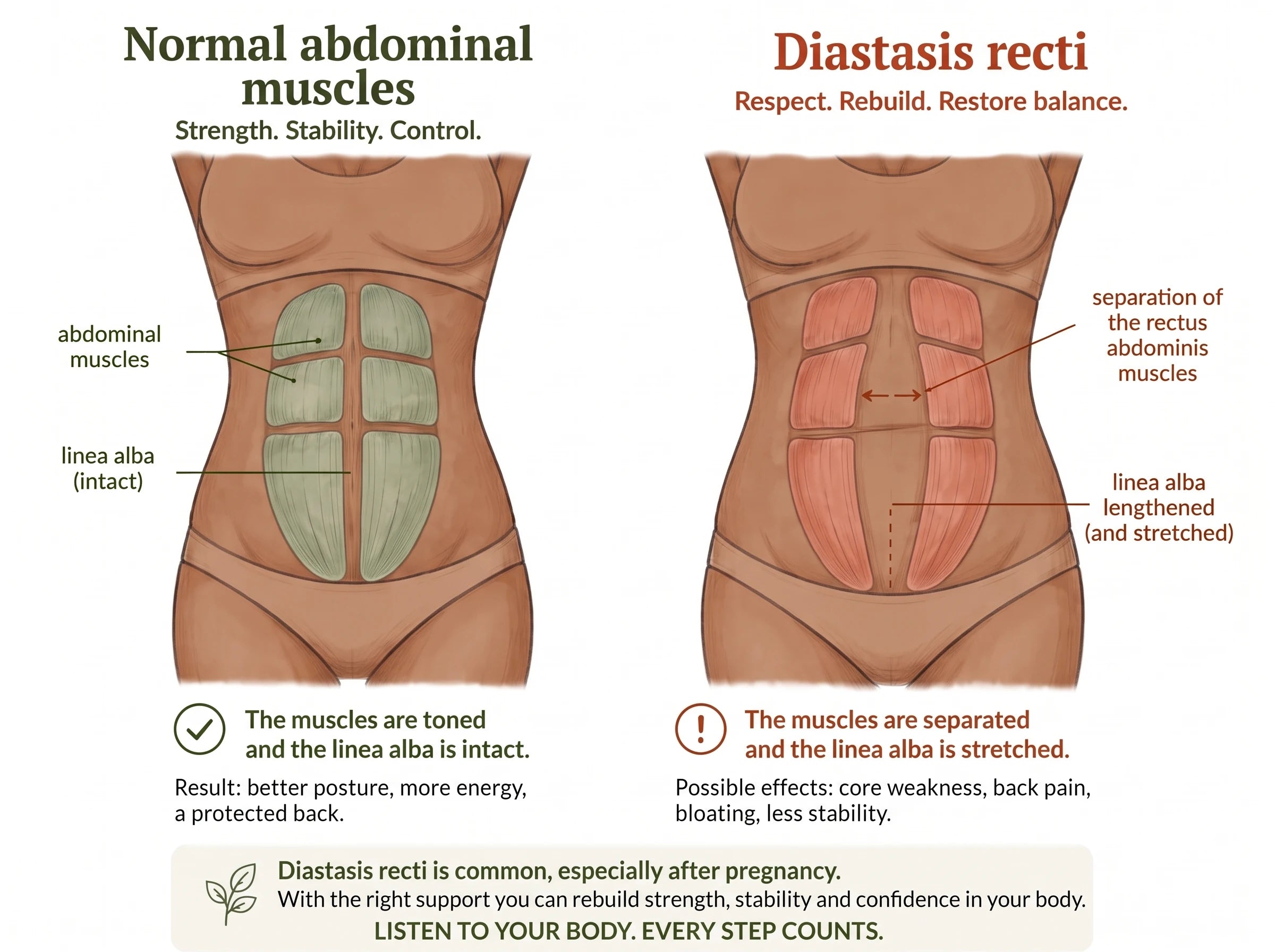
What I thought was “stubborn fat”… was a muscular gap. Left open after my pregnancies. Wider year after year. And accelerated by the hormone drop of perimenopause.
Here is the detail most women over 40 don’t know, and it explains everything:
You can be back at your exact pre-pregnancy weight and still have this stomach. Not a pound more. And there it is. Round, sticking out. Because the problem is not the weight. The problem is the structure.
During pregnancy the two rows of abdominal muscle move apart to make room for the baby. That is normal. That is by design. What is not automatic is them closing back afterward.
In roughly 60% of women who have given birth, that gap persists. Months. Often years. For many, decades. Without circular support the muscles get no mechanical pressure drawing them back together. The belly stays soft, round and forward, no matter how much you train.
And the exercise we usually get told to do? Planks, crunches, sit-ups? They pull the muscles the wrong way. They separate instead of drawing together.
Do you have diastasis recti? You can check right now, in 30 seconds.
The at-home check
Lie on your back with your knees bent.
Place two fingers flat across the middle of your belly, just above your navel.
Slowly lift your head as if to look at your feet, without straining.
If you feel a gap between the muscles, or you see a ridge that “points” toward the ceiling, that is a sign of unrehabbed diastasis recti.
The only way to visually help those loosened muscles draw back together, without surgery and without ab work that makes it worse, is gentle circular compression that wraps the belly at the front, at the sides and around the back. Not rigid shapewear that squeezes the front and lets everything escape sideways.
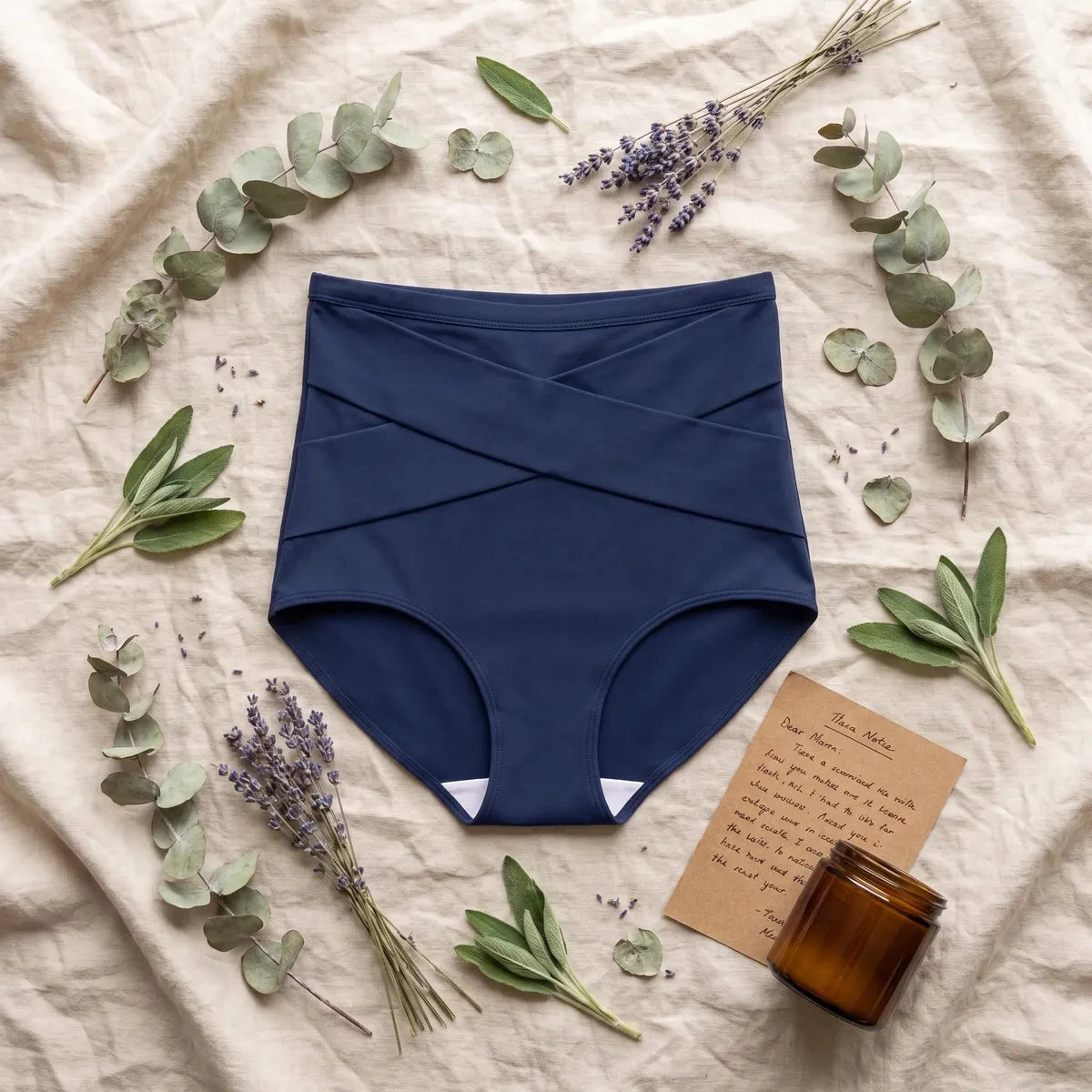
That is exactly the logic behind the crossed bands, the X design built into the Snoothe high-waisted support brief. Inspired by the ancestral bengkung technique, used for centuries after delivery in Malaysia, Morocco, Japan and Mexico.
I wasn’t looking for a miracle. I was looking for something that did what it said.
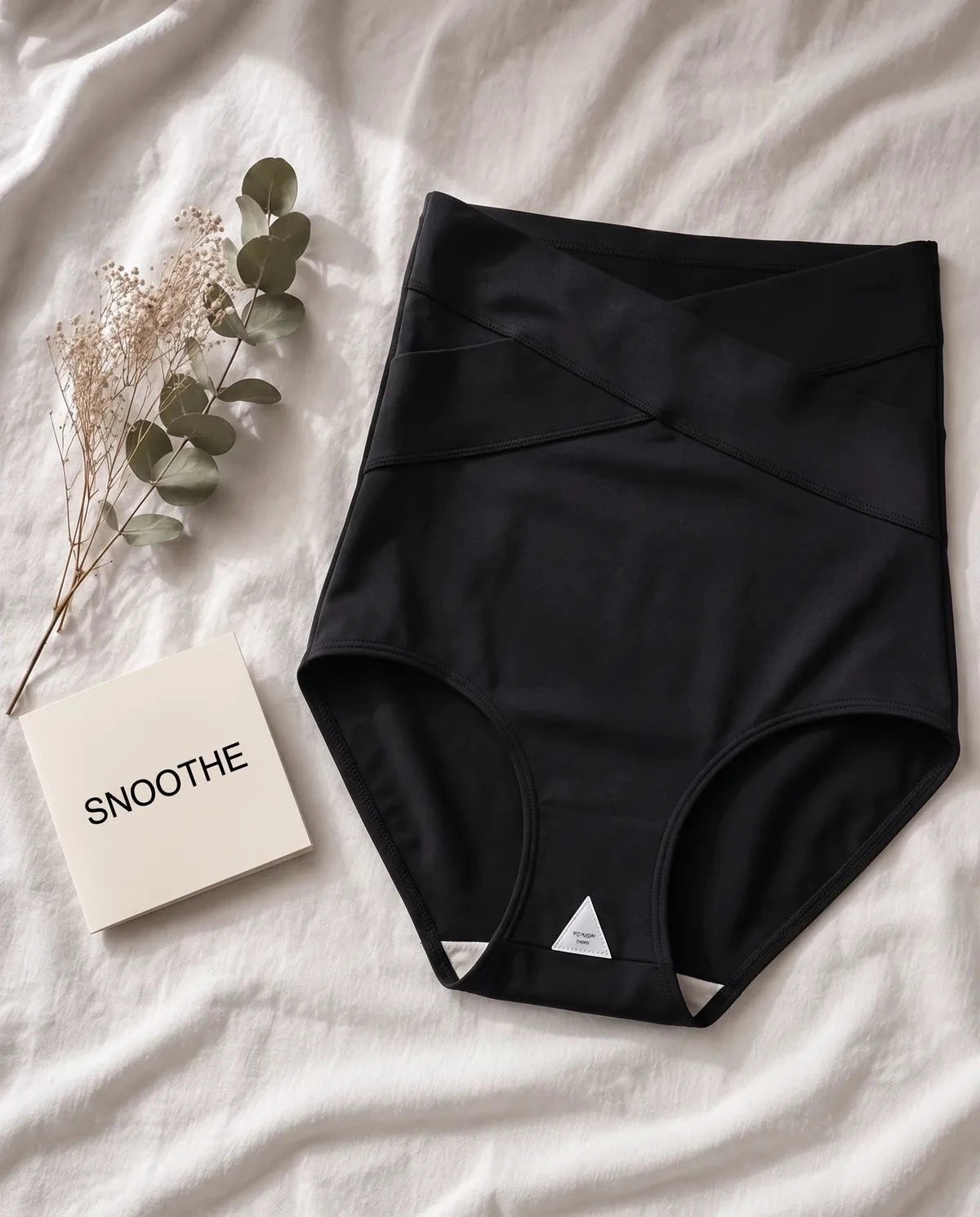
Not a velcro belt that slides down within the hour. Not an uncomfortable shaper you take off at noon. Not a tea, not a supplement, not a 12-week program.
Underwear. That you put on in the morning under your normal clothes. And forget.
The difference from everything I had tried? The compression wraps the whole way around: front, sides and back. Not just the front. All the way around. Like the Malaysian bengkung, the technique women in Malaysia have recovered with for 500 years, but in a brief that slips on in ten seconds.
Thanks to the crossed X design, the pressure is spread across 3 zones instead of being concentrated at the front. The result: it doesn’t roll down. It doesn’t show under a dress. It doesn’t cut off your breath. It doesn’t create side rolls.
I was skeptical. Genuinely. But mostly I was tired of looking in the mirror and not recognizing myself. So I said yes.
The first few days: nothing visible. Then…
Day 1, 2, 3: nothing visible. The compression was gentle. Not uncomfortable. Just… there.
Day 5: same. I was starting to regret it. Until day 8.
Day 8: something happened
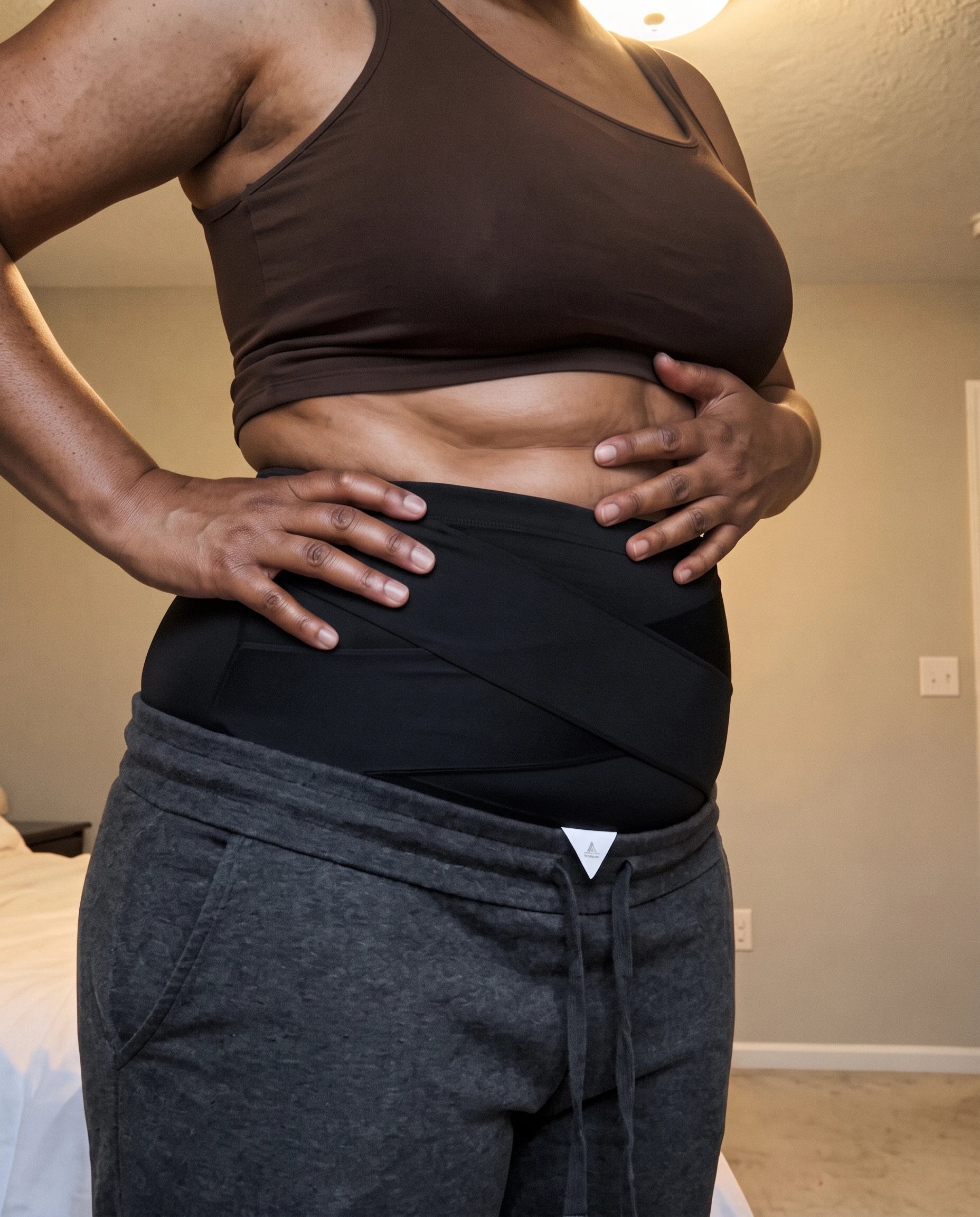
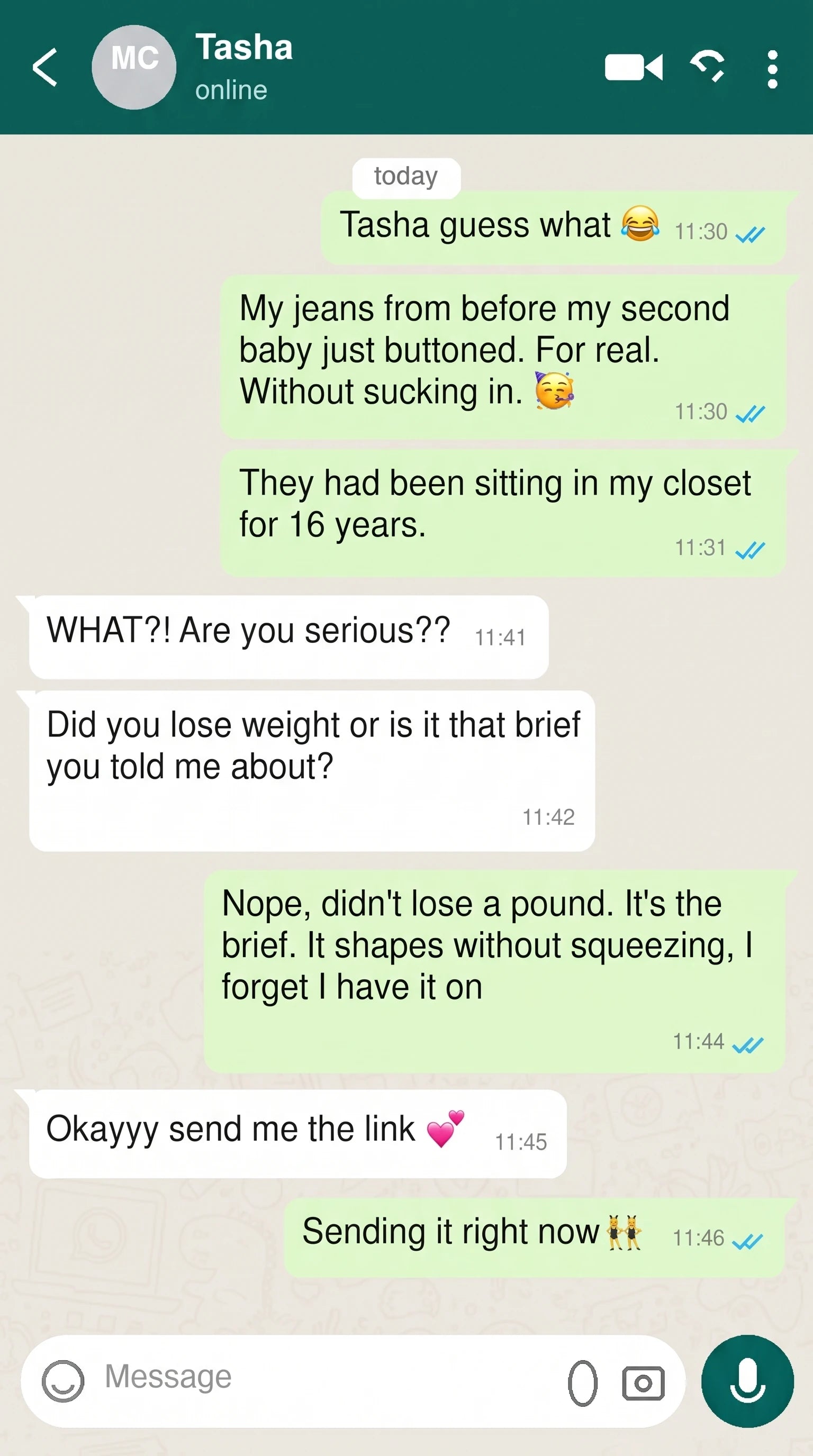
I wake up. I grab my jeans, the ones I had not been able to close since my second pregnancy, 16 years ago.
I pull them on. They come up. I tug at the button. It closes.
Without holding my breath. Without hopping around. Without lying down on the bed.
I looked at myself in the mirror. My waist was there. Not dramatic. But visible. It existed again.
I put my hands on my hips. I cried. Not from joy. From relief.
6 weeks later: the results I wasn’t expecting
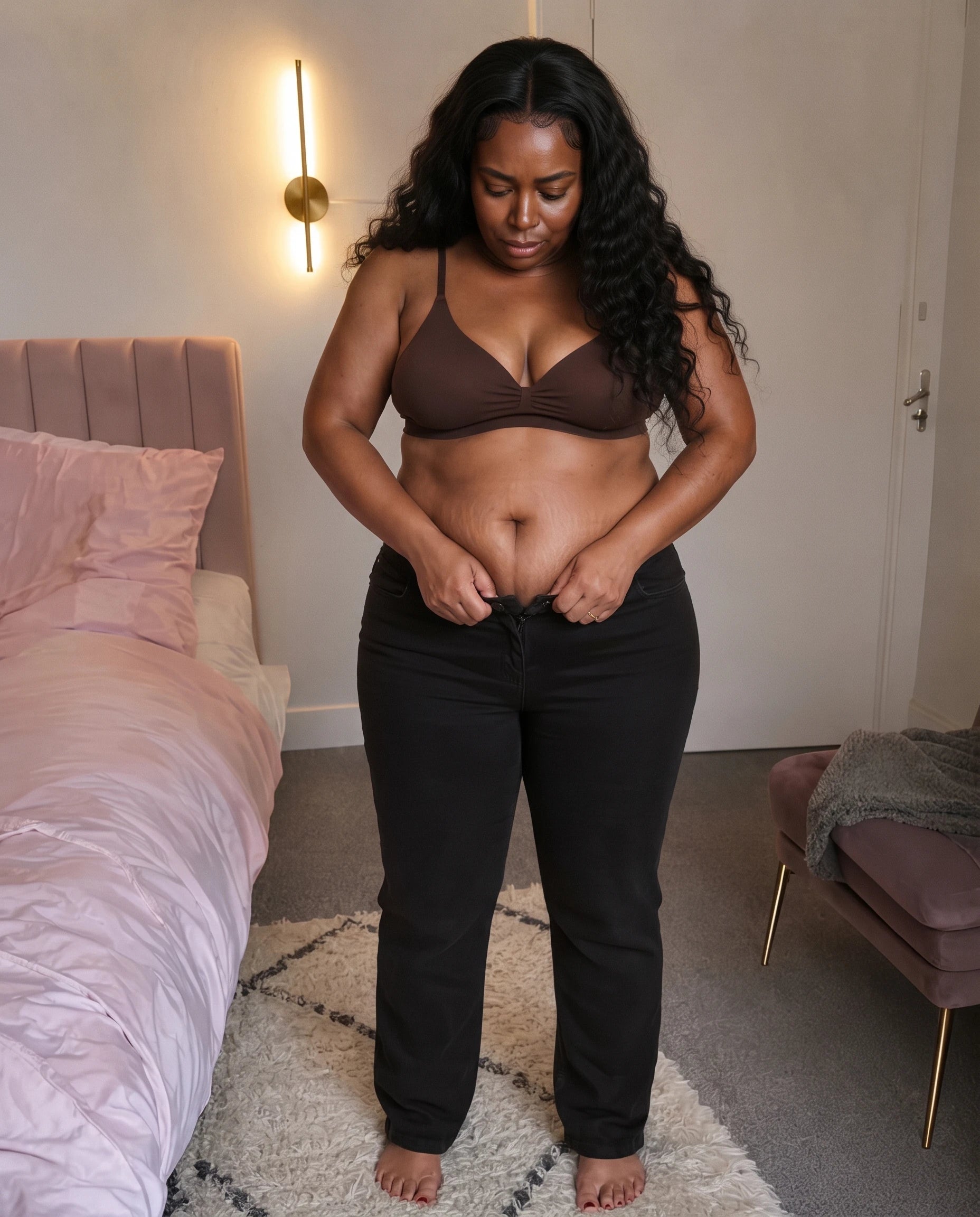
1.5 inches off my waist in six weeks.
For the first time in 13 years, I recognized myself in the mirror. My stomach had a shape. My hips existed. My waist was there.
And what had changed most wasn’t just the silhouette. It was that constant feeling of being “soft everywhere” that had followed me for years. It was completely gone.
That day I texted my friend Tasha. Here is the message:
In the groups where I had read all those hopeless stories, I finally posted my own:
The replies came by the dozen. Women from 40 to 65 writing: “Send me the link.”
What the women who tried it are saying
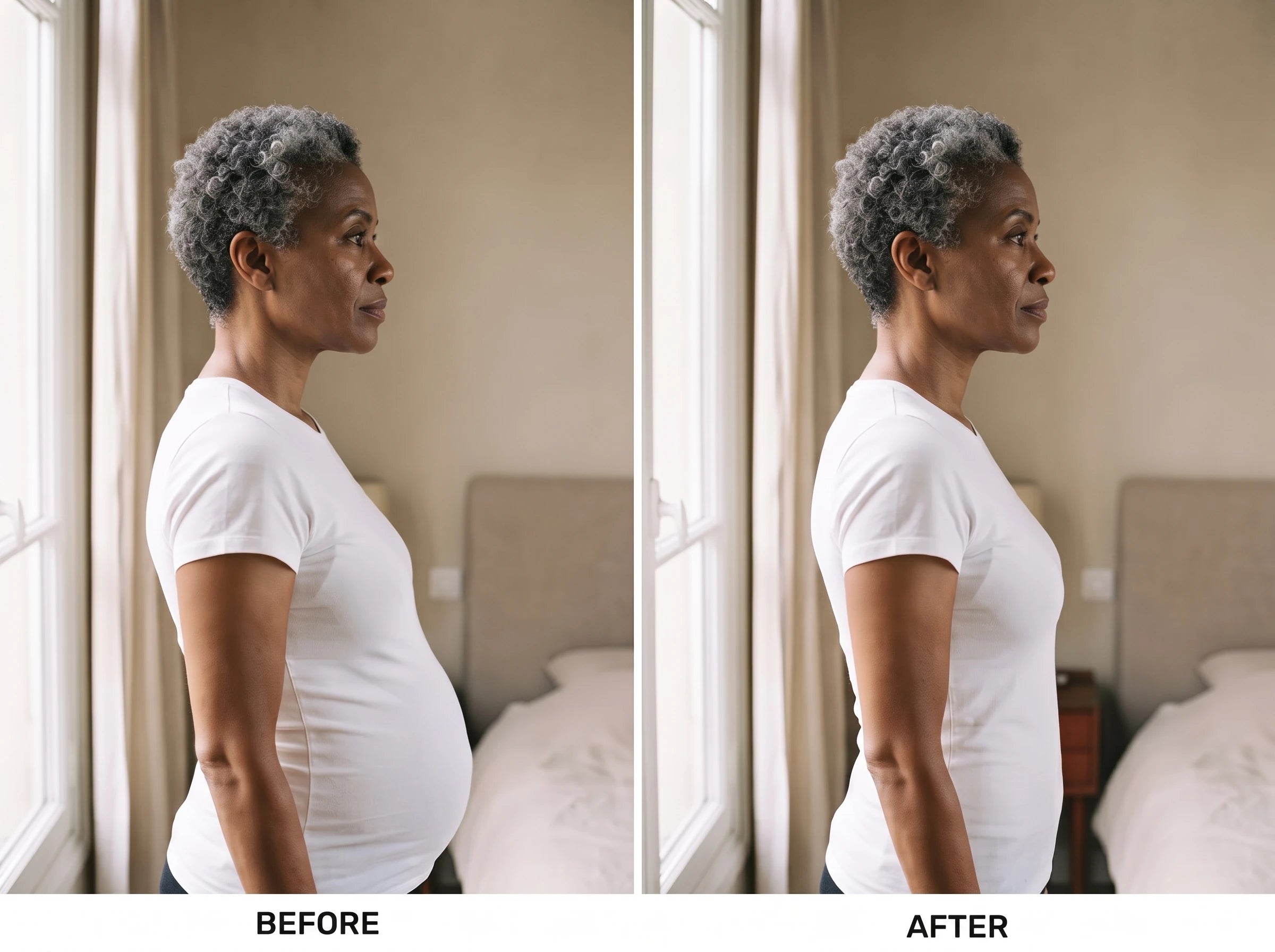
It works if you’re athletic too, or if you “accepted it” 20 years ago
A lot of the women over 40 who write to me have always been active. They run. They do yoga. They lift. And their stomach still doesn’t respond.
That is exactly why the Snoothe support brief exists. Unrehabbed diastasis does not disappear with training. It is compensated with the right pressure: circular, constant, gentle. Not with ab work.
And for the women who have been living with it a long time, 10, 15, 20 years: no, it is not too late. The body can still find a clean silhouette at any age, as soon as the muscular structure gets the right support.
The brief that gave me my mirror back: the Snoothe 360° Support Brief
X design
all day
body
Inside: a crossed X design that smooths the lower belly by triangulation. No silicone strip that pinches. No rigid boning that digs in. No seam that cuts.
Not a belt that rolls down. Not a corset. A high-waisted brief you wear under everyday clothes, and forget. It supports the abdominal wall circularly: front, sides and back.
Available from S to 3XL. Four colors: black, navy, fuchsia, nude. 100% cotton gusset, breathable, machine washable.
Buy 2, get 1 free today only · limited stock

If you read this far, your stomach is not finished
A year ago I was exactly where you may be today. Tired of fighting a body I did not understand. Convinced it was permanent. That it was “age”. That it was “normal after two kids”.
I had read that sentence a hundred times in those groups. And I had started to believe it too.
It is not permanent.
And it is not your fault.
It is a muscular gap. And a muscular gap responds to the right pressure: circular, constant, gentle. Not to diets. Not to ab work. To the right tool for the right problem.
Today, at 47, I fit into my old clothes. My stomach has a shape. And above all: I feel like myself in my body. Not just “mom”. Not just “a woman of 47”. Me.
And if it doesn’t work for you? 100% refunded within 30 days. No questions. No hassle. Everything to gain, nothing to lose.
Buy 2, get 1 free today only · stock is running low